Private Knowledge Base
Your internal documents, procedures, manuals, and operational knowledge are indexed in a controlled environment, so users can ask questions and receive answers based on approved company sources.
At NovaSets, we build local AI systems that turn your company knowledge into a secure, governed assistant for your own organization.
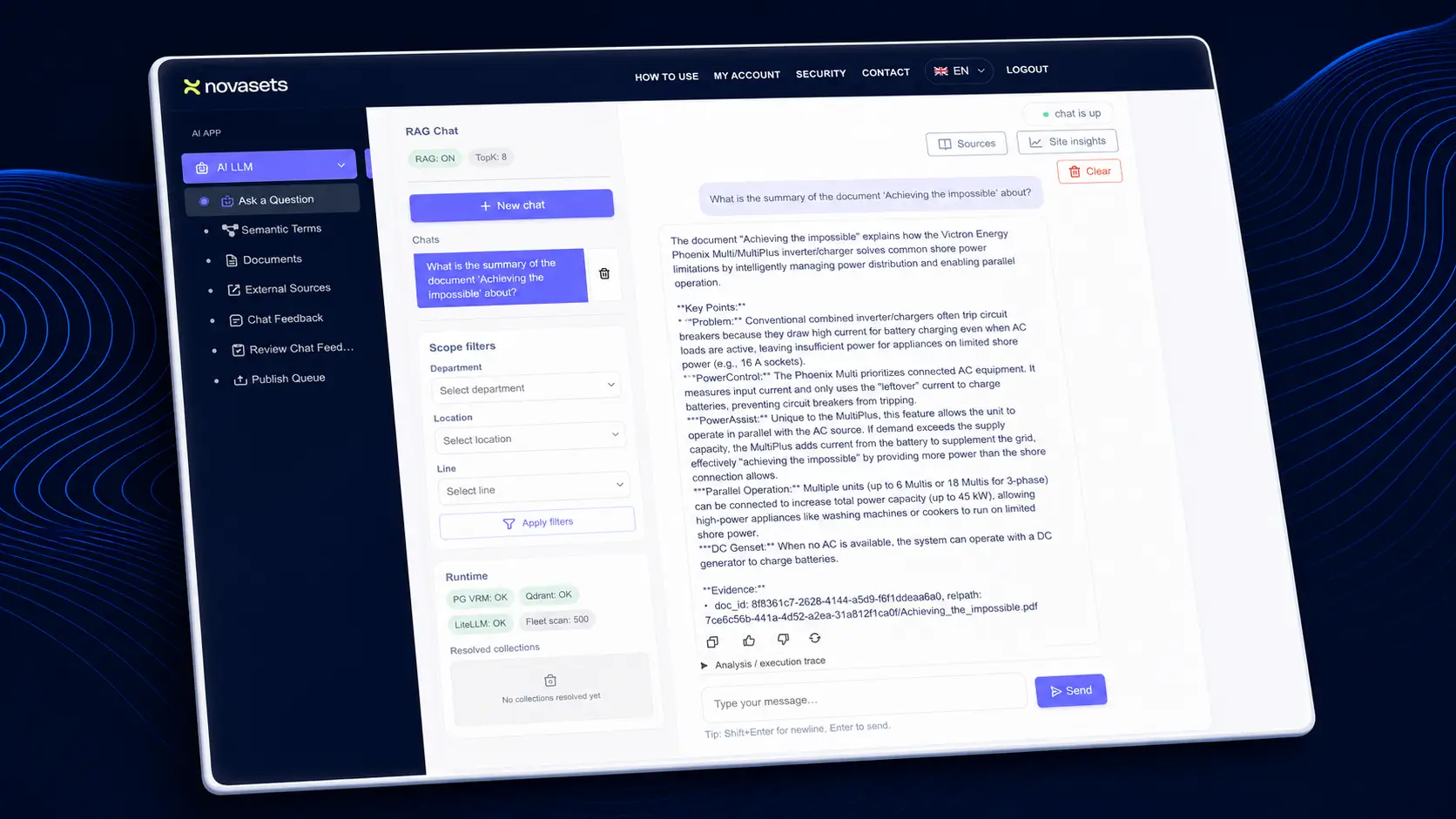
Most companies already have the information they need, but it is scattered across documents, procedures, supplier manuals, links, spreadsheets, systems, and the knowledge of key people. A generic AI tool does not know which source is approved, which terminology is correct, or which document reflects the current way of working.
We bring that knowledge together in a private AI environment where your teams can upload documents, add trusted external links, manage business terminology, review feedback, and control what becomes part of the live knowledge base.
Your internal documents, procedures, manuals, and operational knowledge are indexed in a controlled environment, so users can ask questions and receive answers based on approved company sources.
Every company has its own language. You can manage terms, aliases, site names, product names, metrics, and business definitions, so the AI understands how your organization actually speaks and works.
Users can upload documents and add trusted external sources, but new knowledge does not automatically influence the assistant. It first passes through approval, publishing, and indexing workflows.
The assistant is designed to answer from available evidence, not from guesswork. When information is missing or not approved, it should say so instead of inventing an answer.
Feedback, review queues, semantic updates, document governance, and future impact-preview tools allow the system to improve over time without losing control.
This creates an AI assistant that is not just intelligent, but aligned with your business, your terminology, your documents, and your rules.
The result is a practical local AI system that helps teams find knowledge faster, reduce repeated questions, preserve expertise, improve consistency, and make better decisions based on approved information.
Operational knowledge often lives in ERP screens, maintenance notes, SOP folders, dashboards, email threads, and the heads of experienced colleagues. That makes answers slow, inconsistent, and dependent on who happens to be available.
Teams often lose valuable time switching between systems, files, and colleagues to answer practical process questions.
When answers arrive late or differ per person, execution slows and operational follow-through weakens.
A large share of operational know-how remains undocumented and therefore unavailable when teams need it most.
A private assistant turns fragmented knowledge into a reusable company capability. Instead of repeatedly searching, asking around, or waiting for experts, teams get one place to ask operational questions and receive grounded answers.

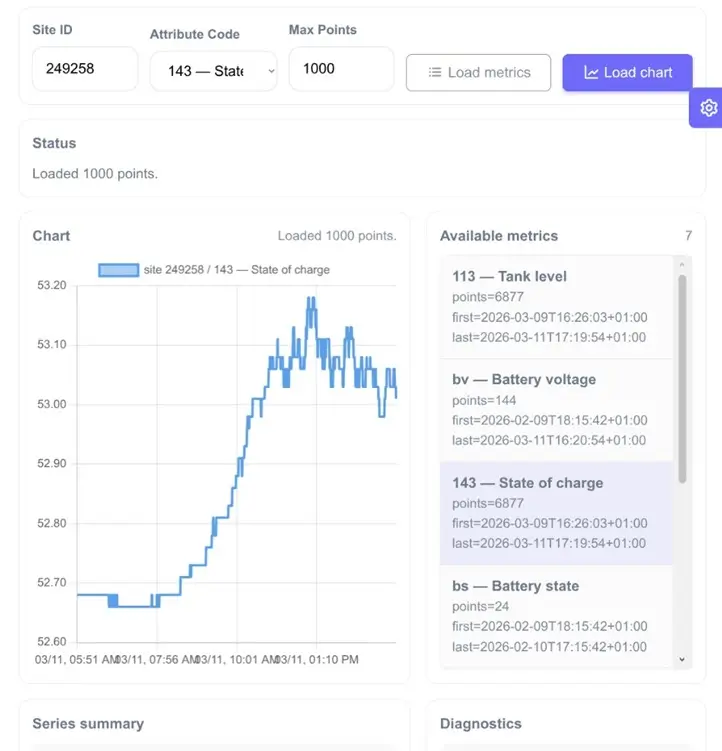
From the first workflow map to a grounded assistant in production, each phase reduces risk and creates usable results.
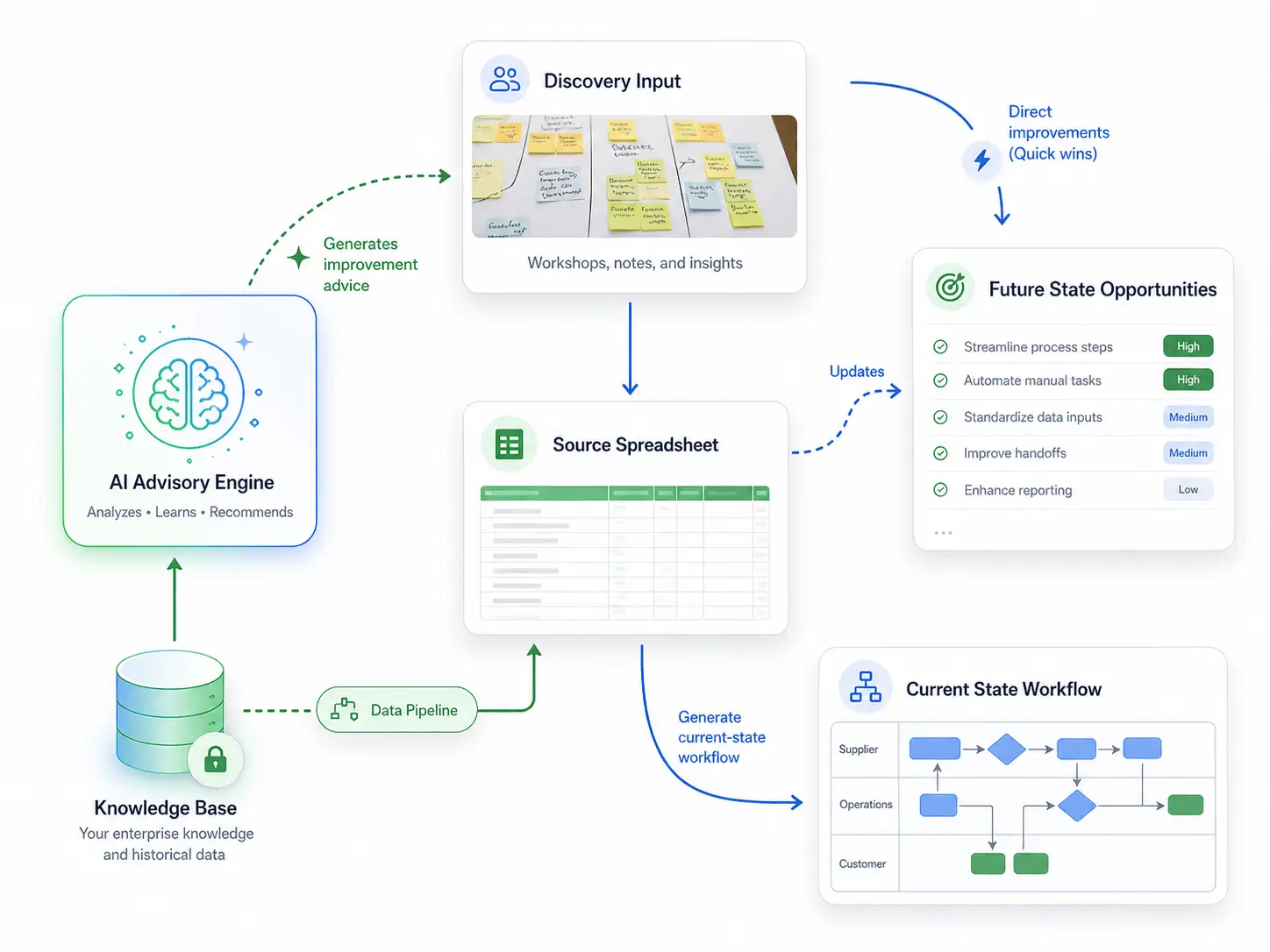
Identify the recurring decisions, process questions, and knowledge gaps that slow your team down every day.
Capture SOPs, process rules, exceptions, and expert know-how in a structure the assistant can use.
Bring together documents, dashboards, tickets, and key applications without exposing your data publicly.
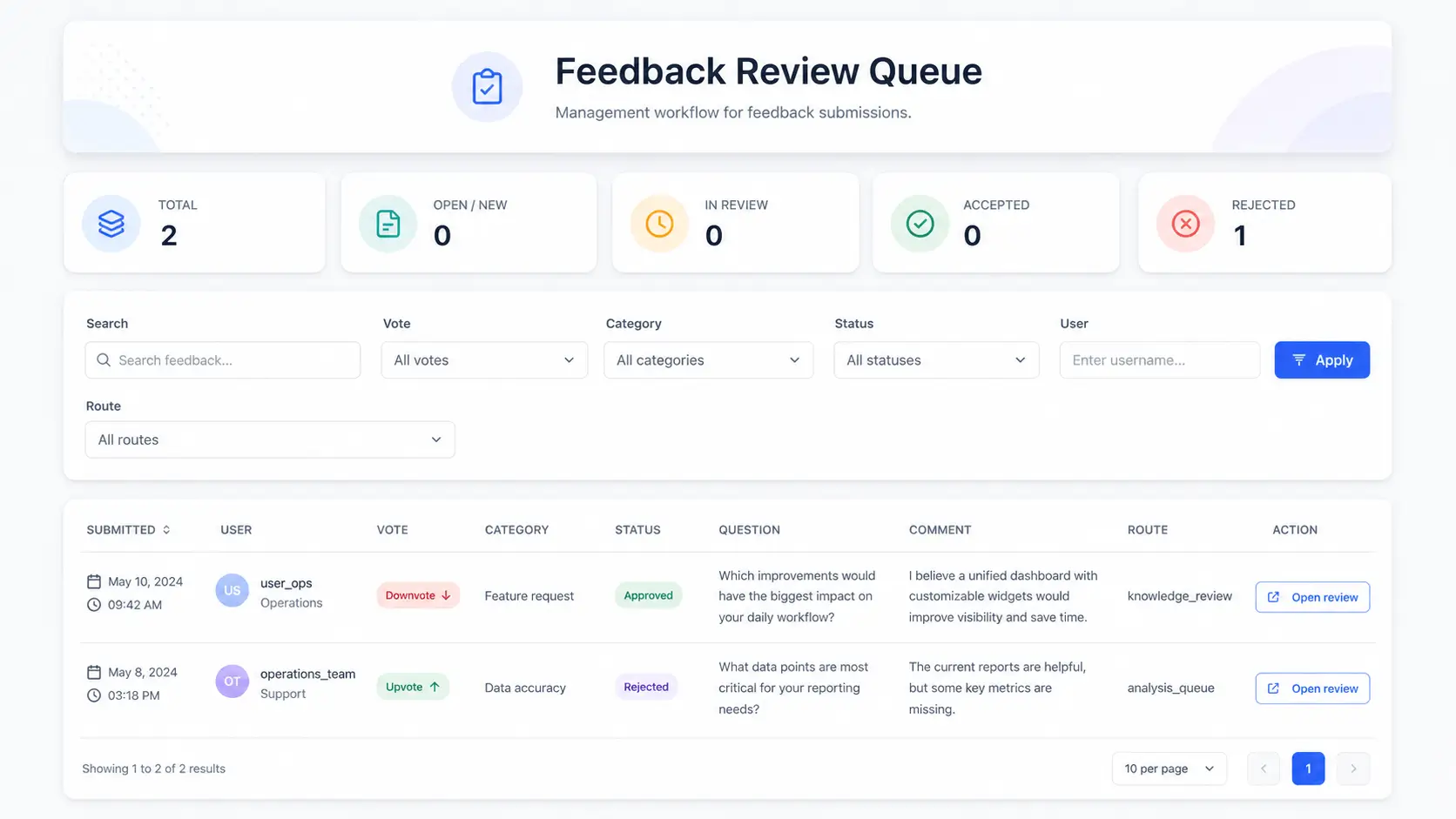
Improve relevance, guardrails, and trust by learning from live questions and operational review.
Use one assistant across production, logistics, maintenance, and support teams so operational knowledge becomes available in the moment of work.
Surface the correct instruction, checklist, or process rule without browsing through folders or asking around.
Keep answers stable across teams, locations, and experience levels so work continues with less variation.
Help technicians find recurring fixes, equipment notes, and prior solutions without long search time.
Give newer colleagues a safe first layer for operational questions while reducing interruptions for senior staff.
Book a short discovery session. We will translate your operational reality into a grounded AI starting point.
Straightforward answers about scope, systems, implementation, and effort.
Yes. The assistant is built around your internal documents, process rules, workflows, and selected systems. The goal is not generic AI output, but grounded answers based on your operational context.
Most companies already have the data, but not one place where people can ask practical operational questions across those sources. The assistant sits above scattered systems and makes knowledge easier to use in daily work.
Yes. We can work with documents first, then connect selected systems where needed. The rollout can be phased so value starts early without waiting for a full integration programme.
A first focused version can usually be scoped quickly once the workflow, answer scope, and knowledge sources are clear. We recommend starting narrow and improving from live use.
Not necessarily. Many first versions begin with process owners, subject matter experts, and existing documentation. Technical involvement can be added later when broader integrations are needed.
Book a short working session and we will define the workflow, answer scope, and best starting point for your private assistant.